What is Myelin and what is Multiple sclerosis?
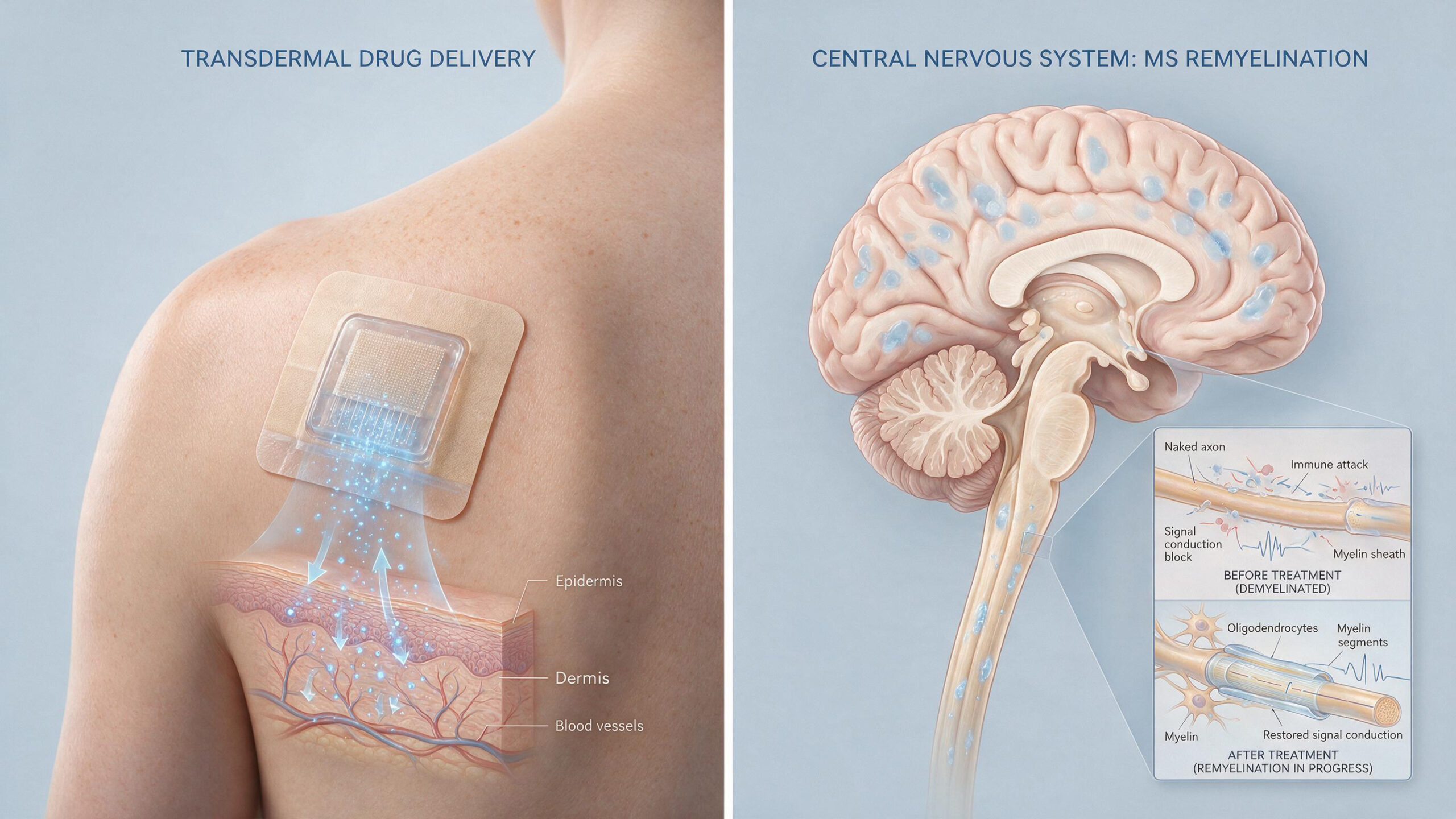
In the central nervous system, a large number of neurons are wrapped by a myelin sheath formed by glial cells called oligodendrocytes. Myelin is essential for the function of these neurons as it protects axons from degeneration and allows fast conduction of electric signals along axons. This fast conduction is necessary for us to think, move, talk, and see properly and without noticeable delay.
Multiple sclerosis is the most common degenerative disease of the central nervous system in young adults with 2.9 million people affected worldwide. This disease leads to progressive problems with walking, moving, seeing, and speaking, and has a huge impact on the quality of life of patients and their families. In this disease, oligodendrocytes are attacked repeatedly by our own immune system, leaving neurons naked without their myelin sheath, which leads to the loss of neuron function and in the long term to their degeneration. Today’s treatments can slow down the frequency of attacks by the immune system, but cannot promote remyelination (rebuild the myelin sheath) of naked neurons, and there is still no cure for this disease.
Our findings on Remyelination
Over the past 20 years, our research has identified a powerful natural mechanism in the body that, when turned on, can promote repair of the myelin sheath, leading to the recovery of neuron functions and their protection against degeneration. This mechanism is orchestrated by an epigenetic factor called histone deacetylase 2 (HDAC2). HDAC2 controls the myelination process at the transcriptional level, which allows the production of the components of myelin. We can activate HDAC2 with a well-known medicine called theophylline, which has been used for decades to treat asthma, so its general safety profile is already well understood. One major advantage of this treatment is its high efficacy on HDAC2 activation when used at low doses.

In our animal studies, low doses of theophylline were highly effective at promoting remyelination in both peripheral and central nervous systems (Duman et al., 2020; Duman et al., 2022), and these doses are far below those that cause side effects in asthma patients.
A drug to promote Remyelination
To deliver constant low doses of theophylline, we have developed a transdermal patch at JGU Mainz that slowly releases theophylline over several days (Engel et al., 2026). This patch is easy to use, avoids high peak doses that may cause toxicity, and is likely to improve treatment adherence compared with daily pills.
Our ForTra-funded project - Moving toward clinical application
With our ForTra-funded project, we will transfer our transdermal patch from JGU Mainz to a patch manufacturer for optimization. The optimized patch will first be validated in a pre-clinical study (funded by the Mainzer Wissenschaftsstiftung and our donators). Our ForTra grant will then allow us to move to GMP-compliant production of the patch, run stability studies, and test the patch in a Phase I clinical trial on healthy volunteers to confirm that it delivers the right dose, sticks well to the skin, and is well tolerated on the skin. The German regulatory authority BfArM has already reviewed and advised on our plans. Because theophylline may both repair damage and reduce future attacks (new study currently under review for publication), this approach has strong potential to improve the quality of life of people with multiple sclerosis and possibly other nervous system diseases, while remaining affordable for health systems.
More information on our findings and our research can be found at the following links: